
Racing in UEFN: Build the Track-and-Lap Classic
Racing in UEFN: Build the Track-and-Lap Classic
Racing is Fortnite with the guns holstered and the throttle pinned. Players pile into vehicles (or run on foot in parkour races) and tear around a track full of boosts, drifts, jumps, and hazards. First across the finish line after the set laps wins. It's one of the few Creative categories Epic itself curates with a dedicated showcase — driving is a genre pillar. This Game Modes entry breaks the lap-and-checkpoint loop down and builds a compile-verified Verse race manager that tracks laps and crowns the winner.
1. What it is
<!-- section-art:1-what-it-is -->

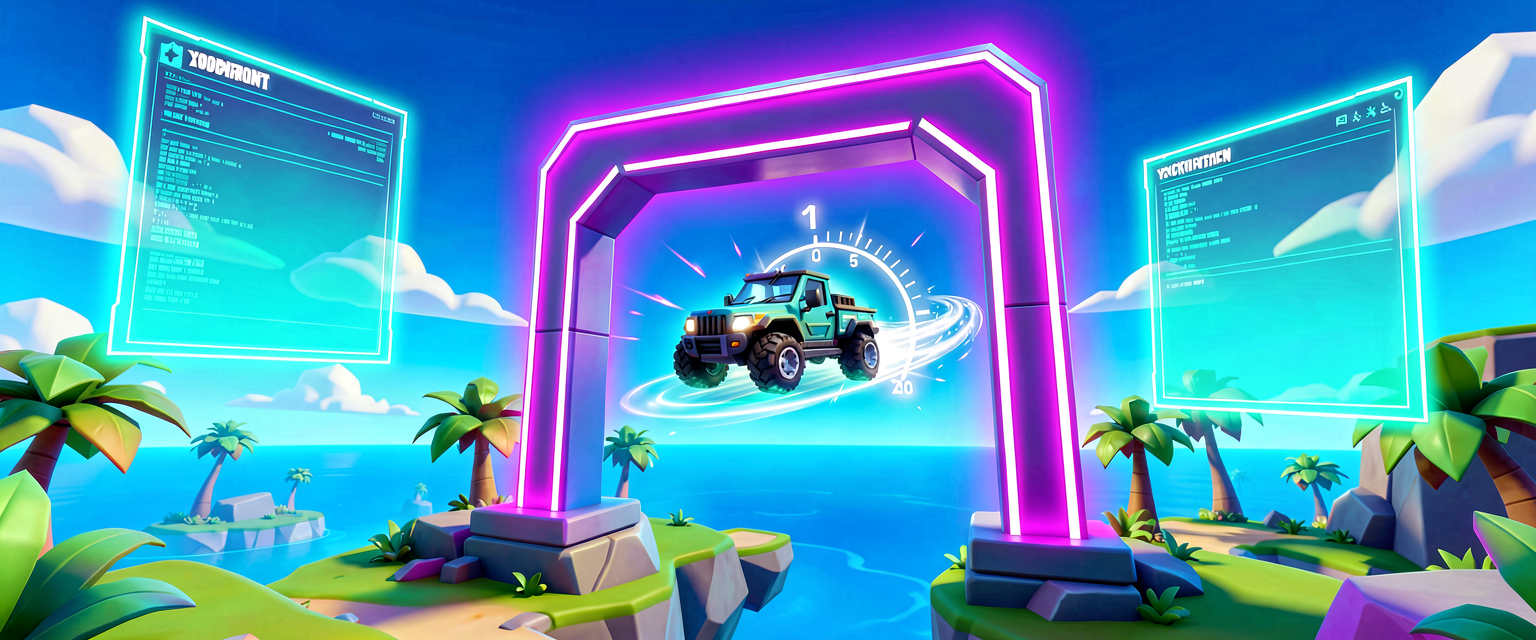
Checkpoint Arch
Racing is a time/position competition mode. Everyone runs the same course; the goal is simply to finish first (or set the best time). The two structural pieces are:
- Checkpoints — gates along the track that validate progress (you can't shortcut past them) and act as respawn points.
- Laps — a full circuit of the checkpoints; most races are 1-3 laps, and completing the final lap finishes the race.
Variants range from pure speed (drive fast, finish first) to skill-focused drift scoring or parkour foot races.
2. Type of game
| Attribute | Typical value |
|---|---|
| Genre | Racing / time trial |
| Teams | Usually free-for-all; sometimes team relay |
| Players | 2-16 on one track |
| Match length | 1-5 minutes; first to finish N laps |
| Respawns | Checkpoint respawn (rejoin at the last gate) |
| Map shape | A looping track with checkpoints, boosts, jumps, and hazards |
3. The loop
Every race is a clean progress loop: leave the grid, hit each checkpoint in order, complete the lap, and repeat until the final lap crosses the line.
The race feels great because progress is always legible — you know exactly which checkpoint and lap you're on, and so does everyone chasing you.
4. Why it's fun
- Pure, primal speed. Boosting through a banked turn and nailing a drift is instantly satisfying, no explanation needed.
- Skill expression. Racing lines, drift timing, and shortcut knowledge separate good drivers from great ones.
- Close-finish drama. Position racing produces photo-finishes and last-lap overtakes that feel amazing.
- No combat barrier. Players who bounce off shooters love racing — it's competitive without aiming.
- Track variety. Desert canyons, sky loops, volcano runs — every track is a fresh puzzle of corners and boosts.
5. Who made the great ones
Racing is big enough that Epic curates it directly:
- Epic Games — the official
Hottest Racing Map Codes in Fortnite Creativeshowcase on fortnite.com regularly spotlights the best community tracks, and the in-game Race category surfaces them. - Octane multi-biome tracks — popular builds take the Octane vehicle through cloud, desert, and volcanic biomes to drill boost and drift control.
- Just Drift — a drift-scoring map where you accumulate points the longer you hold a slide; most drift points wins (a great non-position variant).
- Fortnite Creative HQ's Racing Maps hub is the community index for the highest-rated tracks across driving styles.
6. Examples / variants
- Circuit race — multi-lap loop, first to finish; the classic.
- Sprint / point-to-point — a single run from start to finish, no laps.
- Drift scoring — points for sustained drifts; highest score, not first place, wins.
- Parkour foot race — no vehicles; movement-skill racing across a platforming course.
7. How to make it in UEFN / Verse
<!-- section-art:7-how-to-make-it-in-uefn-verse -->
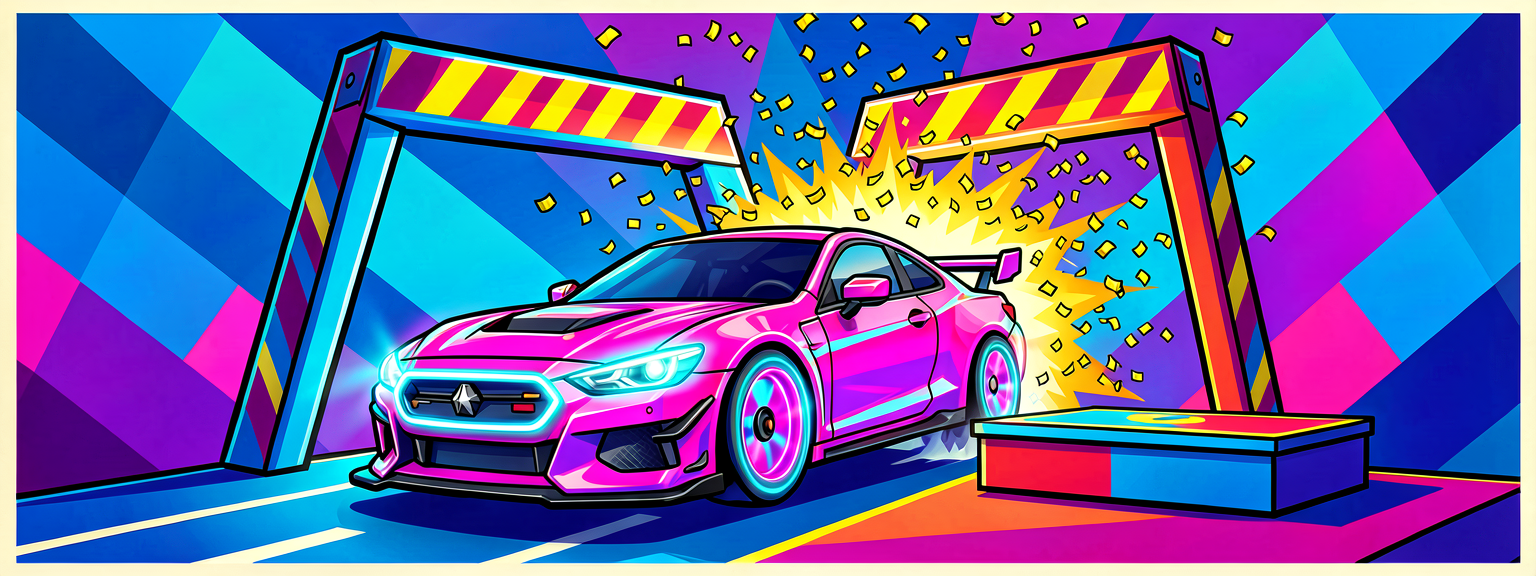
Checkpoint Trigger
The devices you'll place
- Race Manager (
race_manager_device) — this is the heart of the mode. It manages the grid, validates laps, and firesLapCompletedEvent/RaceCompletedEvent. - Race Checkpoint Devices — the ordered gates; you wire them to the Race Manager to define the course and laps.
- Vehicle Spawners — to provide the cars (or omit for foot races).
- Player Spawn Pads at the starting grid.
The Verse mechanic that ties it together
The track, checkpoints, and lap counting are device-driven by the Race Manager. Verse owns the podium logic: react when a player completes a lap or finishes the race, and crown the first finisher. The series staple returns — subscribe to an event, react — on the Race Manager's events.
# race_manager_device fires LapCompletedEvent : agent each lap, and
# RaceCompletedEvent : agent when an agent finishes the whole race.
RaceManager.LapCompletedEvent.Subscribe(OnLap)
RaceManager.RaceCompletedEvent.Subscribe(OnFinish)
And you kick the race off with a single call:
RaceManager.Begin() # releases the grid and starts timing
The full, compile-verified race manager
Drop this racing_device into your project, wire the @editable Race Manager,
and it starts the race, logs each lap, and crowns the first agent to finish.
It's a standalone creative_device, so it compiles on its own.
How it works, line by line
@editable RaceManagerlets a designer drag the real Race Manager (already wired to its checkpoints) onto this device.OnBeginsubscribes to bothLapCompletedEventandRaceCompletedEvent, then callsRaceManager.Begin()to release the grid.OnLapfires per lap — a clean place to record split times or update a lap-counter HUD.OnFinishfires per agent as they finish. Because it fires for each finisher, we guard with aFinished : logicflag so only the first one is crowned.if (not Finished?)reads thelogicflag;set Finished = truelatches it so later finishers don't re-trigger the win.
Gotchas
- The Race Manager owns laps — don't recount them in Verse. Wire the checkpoints to it and let it validate progress; your Verse code only reacts to the events.
RaceCompletedEventfires for every finisher, not just first. Latch alogicflag (as above) or you'll "crown" 2nd, 3rd, 4th place too.- Read a
logicwith?.Finished?is how you test alogicvalue in a failure context;set Finished = trueflips it. - Call
Begin()once. Starting the race is a single call at round start — don't re-call it on every event. - Checkpoint order is the track. Mis-ordered checkpoints let players skip sections; that wiring is the real level-design work.
Recap
- Racing is a position/time competition: hit ordered checkpoints, complete laps, first across the final line wins.
- The fun is primal speed plus skill expression (lines, drifts, shortcuts) and close-finish drama.
- In UEFN the Race Manager is the mode — it owns the grid, checkpoints, laps, and fires lap/finish events.
- The Verse pattern is the series staple: subscribe to
LapCompletedEvent/RaceCompletedEvent, callBegin()to start, and latch a flag so only the first finisher wins. - Checkpoint ordering and track flow are the craft — Verse just runs the podium.
Get the complete code — free
You've read the full walkthrough. The complete, copy-paste-ready Verse solution is free for members — sign in to unlock it.
Free with your BrainDead.TV / BrainDeadGuild Discord account. The walkthrough above is always free.
Check your understanding
Test yourself with an interactive quiz and track your progress + earn XP — free for members.
Turn this into a guided course
Add Game Modes — Racing: the lap-and-checkpoint loop and a compile-clean Verse race/lap manager to your free study plan — we'll suggest related pages and stitch the lot into one compile-checked, self-guided lesson with worked examples and quizzes.
References
Original tutorial generated by Verse Island from the Verse/UEFN knowledge base, with references to the Epic Games sources above. Code is validated against the knowledge base.