

Hide & Seek in UEFN: Build the Playground Classic
Hide & Seek in UEFN: Build the Playground Classic
Everybody has played Hide & Seek. One person counts; everyone else scatters. In Fortnite Creative that childhood game becomes a tense, large-lobby chase: a Seeker (or a growing infected pack) hunts a crowd of Hiders scattered across a detailed map full of nooks. Hiders win by surviving until the timer runs out; the Seeker wins by finding everyone first. This Game Modes entry breaks the format down and builds a compile-verified Verse round manager that counts hiders, runs the clock, and calls the winner.
1. What it is
<!-- section-art:1-what-it-is -->

Asymmetric Chase
Hide & Seek is an asymmetric chase / survival mode. At round start, one or more Seekers are chosen (often held in place during a countdown) while Hiders scatter and conceal themselves. Two clocks decide everything:
- The round timer — if it expires with hiders still alive, the Hiders win.
- The hider count — if the Seeker finds and tags every hider before time runs out, the Seeker wins.
The most popular Fortnite variant is infected-style: a tagged hider becomes a Seeker, so the hunt snowballs and the last survivor is the hero.
2. Type of game
| Attribute | Typical value |
|---|---|
| Genre | Asymmetric chase / hide survival |
| Teams | Seeker(s) vs Hiders (often 1 → many as infection spreads) |
| Players | 8-24 in one big map; the format loves big lobbies |
| Match length | 3-6 minutes per round; survive-the-timer |
| Respawns | Round-based — tagged hiders convert or spectate, reset each round |
| Map shape | A large, detailed venue (mansion, mall, city) with hundreds of hiding spots |
3. The loop
Every round is a countdown squeeze: hiders scatter, the seeker hunts, and the round resolves on whichever clock finishes first — time or the hider count.
The tension is the dwindling clock against the dwindling hider list — whichever empties first decides the round.
4. Why it's fun
- Pure heart-pounding tension. Crouching in a closet while footsteps approach is a feeling no other mode delivers.
- The map is the toy. A great Hide & Seek map has hundreds of clever spots — discovery itself is half the fun.
- Snowball drama (infected). Watching the seeker pack grow while you're one of three survivors is genuinely thrilling.
- No aim required. It's all about positioning, timing, and nerve — totally accessible to casual players and kids.
- Endless replay. Same map, different hides every round; you never run out of spots to try.
5. Who made the great ones
Hide & Seek is one of Creative's most-played casual categories:
- fatal_creations —
Fishy Mansionis the genre titan, with 65M+ players; an infected-style mode with 24 players and 300+ hiding spots across luxury beach mansions. The same creator'sMountain Mansionis famous for its sheer density of spots. - Jxdvn — a
Friday the 13th-inspired build where Jason is the seeker, proving how much a horror theme amplifies the dread. - Color Hide and Seek creators bundle 8 distinct themed sub-maps into one island for variety.
- Seasonal hits like
The Props that Stole Christmas(RICHIMPULSE) blend hide & seek with prop-hunt mechanics.
6. Examples / variants
- Classic survive-the-timer — one seeker, hiders win if anyone lives when the clock hits zero.
- Infected — every tagged hider joins the seekers; last survivor wins. The most popular Fortnite flavor.
- Prop-hide hybrid — hiders disguise as objects (see the Prop Hunt guide) for a deeper concealment layer.
- Themed horror — a single scary seeker, dark map, jump-scare pacing.
7. How to make it in UEFN / Verse
<!-- section-art:7-how-to-make-it-in-uefn-verse -->
Two-Clock Race
The devices you'll place
- Timer Device (
timer_device) — this is the round clock. It firesSuccessEvent/FailureEventwhen it ends, which is how Verse knows the hiders survived. - Class Designer / Team Settings — define the Seeker and Hider classes (movement, visibility, weapons).
- Elimination Manager (
elimination_manager_device) — firesEliminatedEventwhen a hider is tagged/caught, so Verse can count them down. - Player Spawn Pads + a big map full of hiding spots.
The Verse mechanic that ties it together
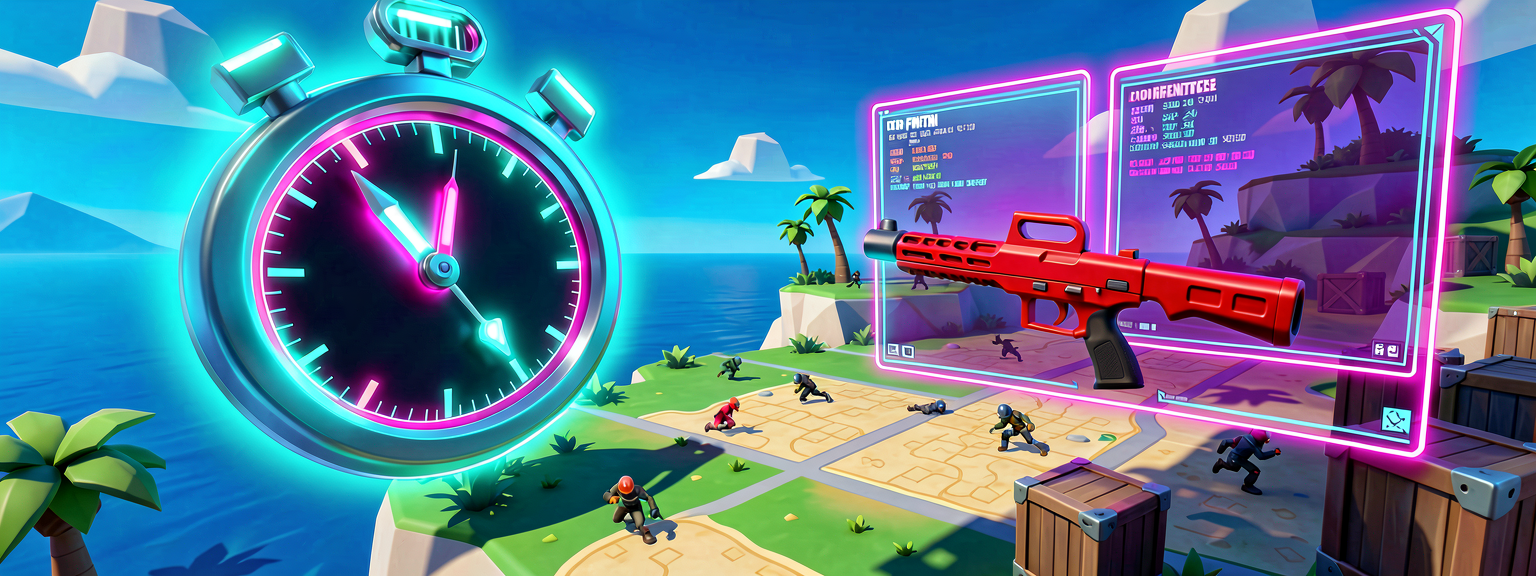
The clock and classes are device-driven. Verse owns the race between two clocks: when the timer ends, hiders win; when the last hider is tagged, the seeker wins. The series staple returns — subscribe to events, react — this time to both the Timer and the Elimination Manager.
# timer_device signals SuccessEvent : ?agent when the round clock runs out.
# elimination_manager_device signals EliminatedEvent : agent on each tag.
RoundTimer.SuccessEvent.Subscribe(OnTimeUp)
EliminationManager.EliminatedEvent.Subscribe(OnHiderTagged)
We seed the hider count from the lobby — the same call used all series long:
Players := GetPlayspace().GetPlayers()   # []player
HidersLeft := Players.Length - 1         # minus the seeker, set in StartRound
The full, compile-verified round manager
Drop this hide_and_seek_device into your project, wire the @editable Timer
and Elimination Manager, and it runs the two-clock race: hiders win on the
timer, the seeker wins on the last tag. It's a standalone creative_device, so
it compiles on its own.
How it works, line by line
- Two
@editablereferences (Timer + Elimination Manager) let a designer drag the real devices in. OnBeginsubscribes to both the timer'sSuccessEventand the manager'sEliminatedEvent, then starts the first round.StartRoundseedsHidersLeftfromGetPlayspace().GetPlayers().Lengthminus the seekers, clamps to 0, and starts the clock withRoundTimer.Start().OnHiderTaggeddecrements; hitting 0 means the seeker caught everyone → seeker win.OnTimeUpfires from the timer'sSuccessEvent. Its payload is?agent(optional), so the handler signature takes?agent. If hiders remain, they win.
Gotchas
- The timer payload is
?agent, notagent.timer_device.SuccessEventislistenable(?agent), so your handler must accept?agentor it won't compile. - Two clocks, one race. Don't try to detect 'time left' manually — let the Timer device fire its event and let the count fire on tags; whichever lands first wins.
- Hold the seeker during the countdown. Hiders need a head start — gate seeker movement with the Timer's start or a separate countdown, or the round feels unfair.
- The map IS the mode. Hundreds of hiding spots, varied sightlines, and dead-ends are the craft — that's level design, not Verse.
Recap
- Hide & Seek is an asymmetric chase: seekers hunt, hiders survive, and two clocks (the timer and the hider count) decide the round.
- The fun is pure tension and discovery — the map full of clever spots is the toy.
- In UEFN the Timer device is the round clock; the Elimination Manager reports each tag; the Class Designer sets the roles.
- The Verse pattern is the series staple: subscribe to the Timer's
SuccessEventand the manager'sEliminatedEvent, race the two clocks, and award whichever empties first. - Watch the
?agentpayload on the timer event — that's the one compile gotcha here.
Get the complete code — free
You've read the full walkthrough. The complete, copy-paste-ready Verse solution is free for members — sign in to unlock it.
Free with your BrainDead.TV / BrainDeadGuild Discord account. The walkthrough above is always free.
Check your understanding
Test yourself with an interactive quiz and track your progress + earn XP — free for members.
Turn this into a guided course
Add Game Modes — Hide & Seek: the seeker-vs-hider chase, the survive-the-timer loop, and a compile-clean Verse round/timer device to your free study plan — we'll suggest related pages and stitch the lot into one compile-checked, self-guided lesson with worked examples and quizzes.
References
Original tutorial generated by Verse Island from the Verse/UEFN knowledge base, with references to the Epic Games sources above. Code is validated against the knowledge base.